Performance Nutrition: Protect your immune system on the road
“Athletes and staff travelling over more than five time zones have a two to three fold increased risk of illness”
Frequent travel to competitions and camps is a normal part of an athlete’s life and comes with an increased risk of illness. Even minor illness disrupts training consistency and negatively impacts performance. It’s important to support your immune system all year round and this becomes more important during travel. Enclosed, crowded and close contact environments (plane, bus, airport security, dining halls and hotel buffets), and changes in routine, increase the risk of illness further.
What is the immune system and can we support it?
The immune system is a whole-body defence system, constantly working to protect you from illness and is influenced by your daily habits (e.g. how you eat, hydrate, sleep, and recover).
| Energy Intake |
Adequate energy intake is essential, giving your body the fuel needed for optimal immune function. Low energy availability and missing recovery meals and snacks can compromise your ability to fight illness.
|
| Gut health |
Gut health plays a key role (see last month’s article). The microbiome, supported by nutrients (fibre, resistant starch) maintain an important immune barrier in the gut, nose, and throat.
|
| Iron Status |
Iron has a key role in the health of the immune system. Low iron leads to a weaker antibody response.
|
| Hydration Status |
Hydration status is an important part of immune protection. A lack of saliva when dehydrated allows microbes easier entry via the mouth and nose.
|
| Sleep |
Poor or disrupted sleep, common during travel, impairs immune function increasing susceptibility to illness.
|
Factors contributing to lowered immunity
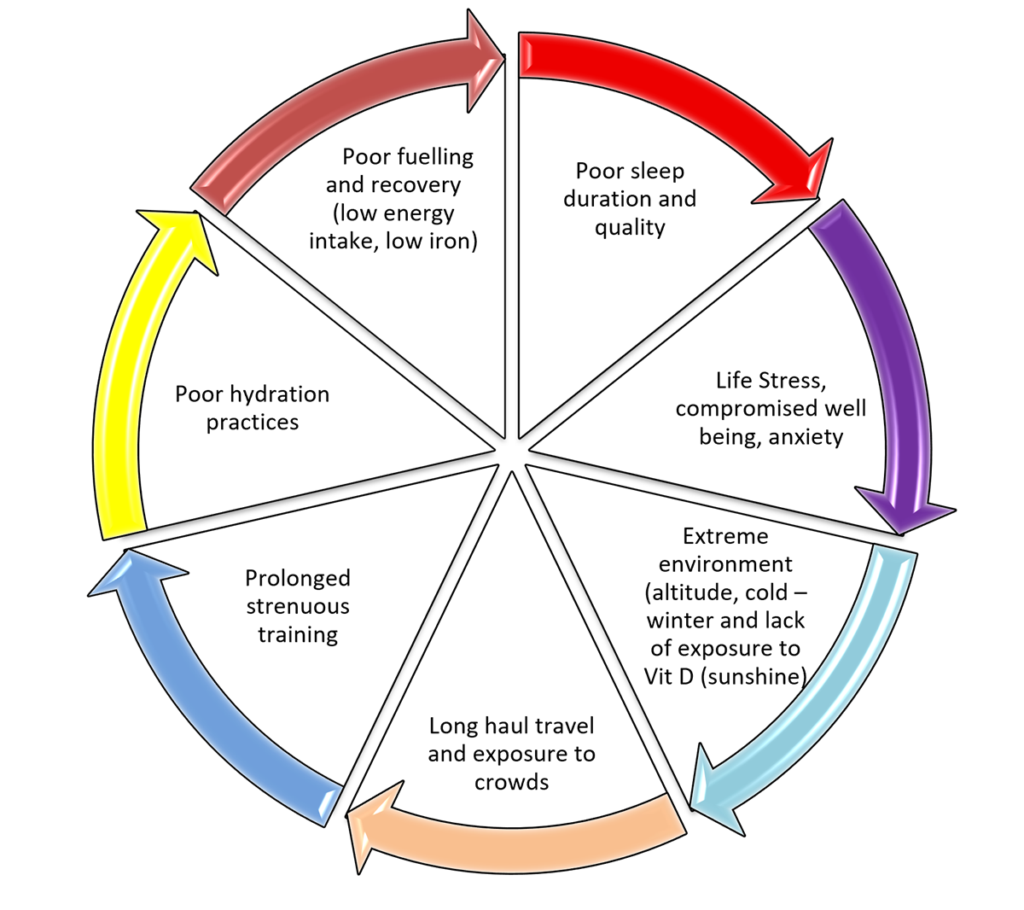
Tips supporting your immune system before travel
- Plan ahead – organise snacks (fruit, nuts, yoghurt, muesli bars, sandwiches) to avoid under fuelling.
- Review meal options so you’re not relying on limited or unfamiliar foods.
- Eat regularly during travel (every 3–4 hours) to support energy, immunity, and recovery.
- Include a vitamin C source at each meal (eat fruit + vegetables) .
- Follow recovery nutrition and hydration if training the day of travel, (carbohydrate, protein, fluids, antioxidants).
- Include probiotic foods where possible (e.g. yoghurt, kefir, Yakult).
- Consider checking your iron status pre-travel (do not supplement without medical guidance).

Tips supporting your immune system during travel
Hygiene
- Sanitise hands regularly.
- Wipe down tray tables, screens, armrests, areas touched by hands with antibacterial wipes.
- Aim air vent towards your face.
- Consider wearing a face mask.
- Be mindful of high-touch areas (security trays, handles, trolleys).
- Limit close contact where possible (allow space while boarding).
- Food safety matters – eat food that is steaming hot or properly cold. Avoid unfamiliar or questionable foods.
Hydration
- Start well hydrated and maintain throughout travel.
- Bring 1–2 drink bottles and accept water when offered.
- Chew gum – helps keep your mouth moist.
- Limit caffeine and alcohol. If using, be strategic based around arrival times.
What you do year-round sets your foundation for travel. Consistently fuelling with enough energy, carbohydrate and protein, and eating a variety of colourful, nutrient-rich foods, helps build a robust immune system so you’re better prepared for the added stress of travel.
Coaches’ Toolbox
Creating a healthy, hygienic team environment is key to reducing illness risk and keeping athletes training consistently.
- Look after yourself – lead by example, model best practice behaviours.
- Call it out – reinforce expectations around hygiene and behaviour in training and during travel.
- Identify early – encourage athletes/staff to report illness ASAP.
- Isolate when needed – reduce spread within the team.
- Prioritise recovery – ensure athletes (and staff) are fully recovered before returning to training.
Take Home Message
Consistent fuelling, hydration, and hygiene supports immune health and supports healthy athletes to train consistently and perform better.