Performance Nutrition: Data-driven fuelling, athlete-centred decisions
“My app told me I’d eaten enough for the day. But I was still hungry – should I trust the numbers or trust my body?”
Technology is rapidly changing how athletes train, recover and make nutrition decisions. AI-driven platforms, wearables, biosensors, and nutrition apps and can provide valuable data, personalise strategies and reshape practitioner workload.
This is exciting. But does more data necessarily mean better decisions?
For the high performance athlete and their support team, technology is a valuable tool in the toolbox – but only one part of the picture.
Pros: Technology’s superpowers
Used well, technology can support performance by streamlining nutrition planning, generating practical meal and snack ideas, and reducing decision making fatigue. It can help identify patterns across training load, sleep, recovery and nutrition habits. Feedback and reminders may support consistent fuelling habits and behaviour change over time.
AI supported training and nutrition programmes can foster collaboration with different team members. The key is choosing the right tool for the right purpose and understanding what the data can – and cannot – tell us.
Cons: Where we need to be cautious
Energy requirements are difficult to predict
AI platforms and wearables estimate rather than directly measure energy expenditure, and accuracy varies between devices, activities and athletes. If energy expenditure is underestimated, an athlete may consistently under-fuel, compromising training quality, recovery, health and performance. AI programmes and meal planners are often hosted overseas meaning they don’t use NZ Food Composition Tables, leading to inaccuracies when estimating calorie and macronutrient intakes.
There is also concern that AI generated meal plans may not adequately match carbohydrate intake to training demands. An athlete’s fuelling needs change across the training week/cycle, and targets may not reflect the demands of a specific session, competition or period. Depending on the platform and its inputs, recommendations may also place disproportionate emphasis on protein or fat which can compromise carbohydrate availability.
When tracking becomes the focus
Nutrition apps can help athletes identify eating patterns, but constant tracking may also encourage rigidity, and reliance on external targets in some athletes. Hunger, fullness, enjoyment and flexibility can become secondary to achieving targets.
For some athletes, this may affect their relationship with food or contribute to anxiety around eating. This is particularly important when working with athletes vulnerable to disordered eating, body image concerns or RED-S, where protecting a healthy, flexible relationship with food is essential.
The path forward – integrating technology into practice
Nutrition technologies, wearable biosensors and AI meal-planners can help organise information, generate ideas and support decision-making. Their usefulness, however, depends on the quality of their inputs, the assumptions behind their recommendations and how well they reflect the athlete’s circumstances.
Technology cannot always account for changing appetite, illness, gastrointestinal symptoms, life stressors, fatigue or an athlete who remains hungry despite meeting a prescribed target.
The answer is not to choose between data and intuition. It is to use both, and not to lose sight of the athlete at the centre of it all.
Registered Nutritionists/Dietitians bring the relationship, context, evidence and individualisation needed to interpret information and translate it into practical strategies. Coaches also play an important role: noticing patterns, asking questions and helping athletes access the right expertise.
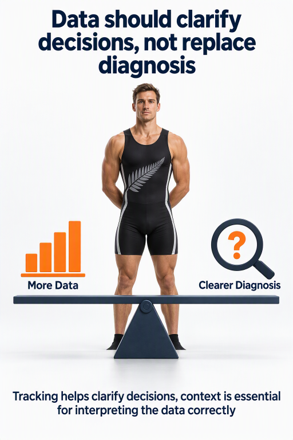
Image adapted using AI from Putting Perfomance Nutrition in Practice (Graphic), Oct, 2026: https://laurentbannock.com/newsletter/putting-performance-nutrition-into-practice/
Coaches’ Toolbox for using tech: Five questions to ask
- What question is this data trying to answer? Think about what’s already known before diving into the numbers.
- How reliable is this data? Get a feel for where it comes from, and what assumptions or limits it has.
- Does this data even apply to this athlete? Think about their sport, training demands, health, goals, and personal circumstances.
- Does it match what the athlete is experiencing? Check in on hunger, energy, mood, sleep, life stressors, menstrual cycle, recovery, and performance alongside the numbers.
- What should we do with the information? Look for patterns that are genuinely useful, resist the urge to react instantly, and loop in the Performance Nutritionist when you believe nutrition practices need to be assessed.
References and Further Information
- Artificial Intelligence (AI) in Sports Nutrition.
- There Is Only Ahead and Behind
- Mountjoy M, Ackerman KE, Bailey DM, et al. (2023). 2023 International Olympic Committee’s consensus statement on Relative Energy Deficiency in Sport (REDs). British Journal of Sports Medicine, 57, 1073–1098.
- Putting Perfomance Nutrition in Practice (Graphic), Oct 2026
- We Do Science: How to Make Better Sports Nutrition Decisions | Prof. Michael Gleeson