Performance Nutrition: Body image and difficult conversations
“Body image concerns can affect anyone, regardless of shape, size, gender, age, ability, or level of sport.”
High performance doesn’t have one look
How you feel about your body can shape how you train and perform, more than you may realise.
How body image may influence you
As an athlete, body image is also shaped by performance demands, sport culture, feedback, and beliefs about what an athletic body “should” look like. It can shift depending on context, especially how your body is seen or valued in sport versus everyday life.
Why it matters
Having a positive or neutral body image supports better fuelling, recovery, and performance. Body image concerns can pull your focus away from performance, affecting confidence, decision-making, and fuelling habits. It also increases the risk of developing disordered eating, eating disorders and REDs (Relative Energy Deficiency in Sport).
What the research says
Athletes report elevated sport specific pressures around shape, leanness, aesthetics, selection, uniforms and power-to-weight “ideals”. Some athletes feel the pressure to be leaner or lighter, bigger, or more muscular. A 2023 NCAA study found female athletes were more likely to be trying to lose weight, while male athletes were more likely to be trying to gain weight, showing body pressures in sport are variable.
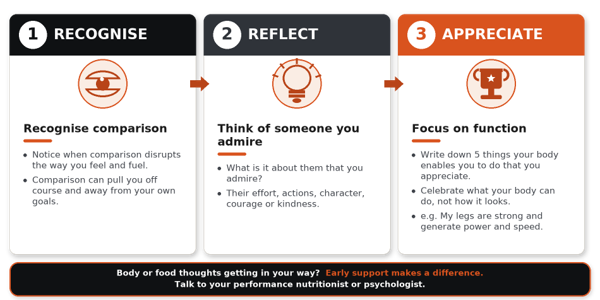
Developing more positive body image is possible – here are 3 steps to get started:
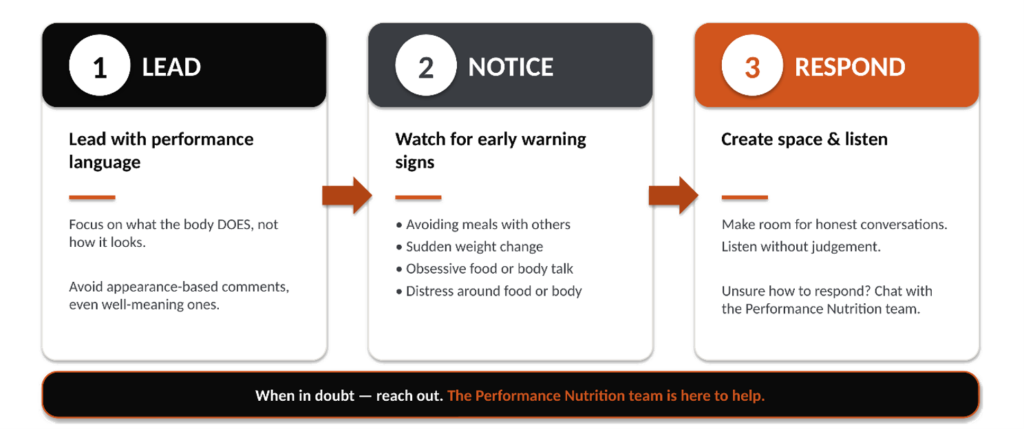
Coaches Toolbox
Coaches shape the environment athletes fuel, train, and recover in. Making small language shifts can support a more positive fuelling culture without unnecessary food or body commentary. For example:
| Instead of this: | Try this instead: |
| “That’s a lot of sugar!” | “It’s great to see you’re coming prepared with fuel for training.” |
| “It’s a rest day; I don’t think you need that much food.” | Don’t comment. Trust that athletes know what they need. Avoid making assumptions and projecting your own food beliefs. |
| “You need to lose/gain weight in order to be competitive.” | “Let’s plan a support team meeting to find your competitive edge”. |
| “You’ve earned a sweet treat after that training session, well-done.” | “That was a great training session, well-done.” |
How to respond when an athlete says…
It can be difficult to know how to respond when an athlete makes a negative food or body comment, here are some simple suggestions to get started with:
| When an athlete says: | Try responding with: |
| “I feel so fat/bloated today”. | “Bodies change day to day. How’s your fuelling and sleep been lately?” |
| “I am going to cut carbs/skip breakfast for the rest of this week”. | “That sounds quite drastic, does that align with your performance goals?” |
| “They look so ripped, I wish I looked like that”. | “Everyone’s body responds differently to training. What matters is what your body can do, how are you feeling in training?” |
| “I need to lose weight to make selection”. | “Selection is about performance, not a number on the scale. How can we support your performance goals?” |
Key coaching takeaways