Team Behind the Team: Preparing Athletics for Glasgow 2026
While the athletes themselves move around the world chasing qualifying marks, real momentum is being built by the HPSNZ Athlete Performance Support (APS) team — the “team behind the team” providing world‑class multi-disciplinary support including Physiotherapy, Strength and Conditioning, and Performance Nutrition.
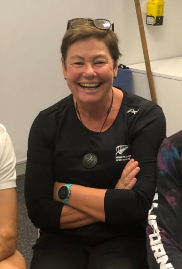
Louise Johnson
For Lead Performance Physiotherapist Louise Johnson, who will travel with Athletics NZ to provide on‑the‑ground Games support, this is familiar territory. A true veteran of high performance sport, Louise has supported athletes through seven Olympic Games and four Commonwealth Games, bringing more than three decades of experience to this campaign. And with her extensive Games history, she’s clear: “All the work is done before you get on the plane.”
That work is vast. Athletics is one of the most globally dispersed programmes, with more than 30 high performance and development athletes training and competing across multiple continents.
Louise coordinates with 23 physiotherapists, more than 20 coaches, and the Athletics New Zealand high performance operations team to maintain up‑to‑date medical and performance information. The team’s newly introduced electronic health record system and weekly APS meetings mean issues can be spotted early and managed collectively. As Louise notes, she is never working in isolation: “There isn’t a day where I’m siloed… collaboration just is.”
Once the team reaches its Manchester camp and then Glasgow, the planning becomes even more precise.
With athletes likely spread across several accommodation sites, Louise’s world becomes a matrix of treatment schedules, warm‑up‑tent set‑ups, and scenario plans that cover everything from departure timings to post‑competition athlete collection.
“The goal is simple: no surprises. Whether an athlete exceeds expectations or faces an unexpected setback, the response from the support team must be consistent, calm, and thoroughly rehearsed,” says Louise.
While physiotherapy focuses on keeping athletes optimally prepared to train and compete, Senior S&C Coach Simon Chatterton is helping athletes navigate one of the busiest qualification windows of the year.
The emphasis now is on balancing training load, freshness and fatigue so athletes can deliver at New Zealand based competitions to qualify for Glasgow, followed by another key training block before many head to Europe in May.
“Athletes are like Ferraris—they spend a lot of time in the garage to ensure they are highly tuned to perform at their best when it matters most,” Simon says.
Because S&C coaches do not typically travel, Simon and his colleagues rely on constant remote communication. Athletes often send photos and videos of gym set‑ups in far‑flung locations so programmes can be adjusted to the equipment available. Weekly or fortnightly tight‑team meetings — involving the athlete, their coach and key HPSNZ APS team members — keep everyone aligned despite time zones and travel demands.
The Commonwealth Games themselves sit uniquely within the broader athletics season, meaning athletes do not taper off afterwards; many head straight back into competition in Europe. This requires careful load management and long‑term planning to ensure to not only peak for Glasgow, but to continue performing in major meets for the remainder of the international season.
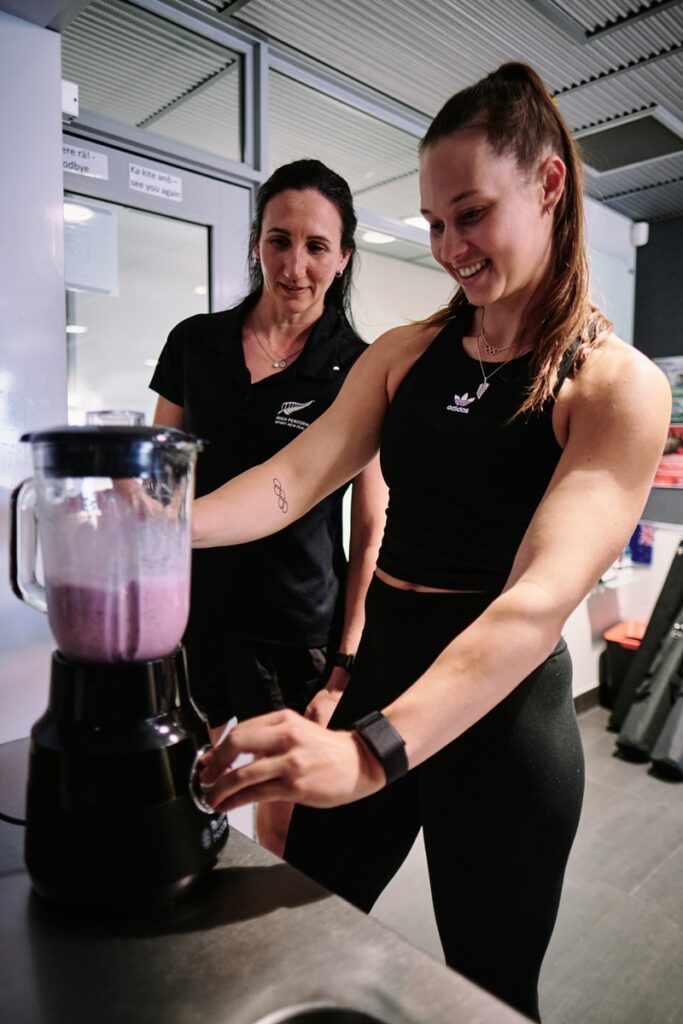
Nutritionist Katie Schofield in the kitchen with pole vaulter Olivia McTaggart
For Performance Nutritionist Katie Schofield, the focus is on three key pillars: illness prevention through adequate fuelling, well‑practised race‑day nutrition routines, and preparation for long‑haul travel so athletes arrive settled and ready to train.
Katie notes that the familiarity of food in Glasgow will be a real advantage, helping athletes maintain routines and fuelling habits with minimal disruption.
As with the rest of the APS team, much of Katie’s support is now delivered remotely via video calls, messages and regular check‑ins. The weekly APS meetings often surface useful insights — like an athlete struggling to find appropriate foods overseas — that allow her to intervene early.
Together, the physiotherapy, S&C, and nutrition teams, along with their colleagues in Performance Psychology, Performance and Technical Analysis, Medical and Physiology, form a cohesive network supporting Athletics NZ’s philosophy of developing robust, resilient performers.
As Glasgow 2026 approaches, it is this invisible layer of preparation — stretching from Auckland to Europe to the warm‑up tent in Glasgow — that will help Athletics New Zealand’s athletes step onto the track or into the field ready to compete at their best.