Coaching Female Athletes takes shape through collaboration and learning
Sitting as a core element of the HWiPS strategy, this work focuses on utilising the strength of the coaching relationship to better support female athletes.
While significant effort has gone into developing Health Basics resources, HWiPS Lead Sue Robson says this initiative recognises that knowledge alone is not enough. Instead, it aims to support coaching environments grounded in athlete voice, safety and choice with a clear goal of increasing coaches’ comfort and confidence in this space.
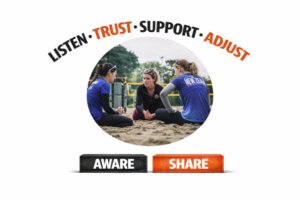
The development journey has been highly iterative.
An initial working group in December 2025 brought together coaches from across sports and levels to test early thinking and identify learning needs. Their feedback directly informed a pilot workshop delivered in February 2026, which attracted strong interest, with more than 70 coaches expressing interest and 15 participating across nine sports.
This pilot introduced a hybrid learning model, combining online content, including webinars, athlete stories and practical resources, with a two and a half hour, in-person workshop focused on discussion and scenario-based learning.
While the approach was positively received, it also highlighted opportunities to better connect online learning with in-room application and cater for different experience levels.
“These insights have driven further evolution,” says Sue.
“An interactive day with the Te Hāpaitanga coaching cohort in April 2026 provided deeper exploration, allowing facilitators to test tools, language and practical approaches in a more immersive setting.
“This experience reinforced the value of creating space for applied learning, peer discussion and real-world coaching scenarios.”
Next steps reflect this continued refinement. A fully online Coaching Female Athletes module is currently in development, with launch expected in July 2026, enabling flexible, self-paced learning.
In parallel, an in-person workshop is planned for later in 2026, bringing together knowledge, conversation and role exploration in a more cohesive format.
Importantly, the programme continues to evolve organically — shaped by coach feedback, collaboration across HPSNZ teams, and real-world testing.
Coaches have contributed to the growth in overall engagement with the resources in the Sport Tutor Coach Performance Library pilot. This has been particularly strong and higher than expected, building steadily in the lead-up to and during the initial workshop period (December through February).
This momentum is reinforced by engagement data for the Coaching Female Athletes online resources, which are acting as a valuable complementary channel to the HPSNZ website and showing sustained, incremental use over time.
“Ultimately, success will be measured not just by participation, but by coaches actively using these tools in the field, strengthening conversations, adapting environments, and supporting the performance and wellbeing of female athletes,” says Sue.