Performance Nutrition: Food variety and performance
“Eating a wide range of foods gives my body what it needs to train hard, recover well, and stay healthy across the season.”
They say variety is the spice of life and when it comes to training and performance it may also give you that extra edge. One of the best predictors of performance is good training availability, being able to keep athletes on the track, in the pool or on the field by minimising injury and illness.
Last month’s Performance Nutrition column introduced why it is important to fuel for the training work done. While energy is the fuel for the body’s engine, think of food variety as the oil, making sure the body runs smoothly. There is no one food that provides every nutrient that a body needs, which is why it’s key to mix and match from different food groups.
Red meat and baked beans both provide protein, however red meat is also a good source of iron which is important for delivering oxygen around the body, and the supporting immune system, while baked beans also provide carbohydrates and fibre.
Oily fish such as mackerel or salmon provide omega-3 which helps reduce inflammation back to baseline faster without blunting training response.
Calcium is important for bone health and is found in dairy, bok choy, and tinned salmon.
Nuts, seeds and avocados are good sources of mono and polyunsaturated fats which are energy dense and help athletes meet their high energy requirements.
Eat the rainbow
Fruit and vegetables play a key role in performance and health.
HPSNZ Performance Nutritionists often encourage athletes to eat the rainbow, as different colours provide different nutrients.
No single colour is “best”, the real benefits come from variety. Many protective phytonutrients are found in the skins, so where possible, leave skins on foods like apples, peaches, potatoes, and eggplant.
Below are examples of how different coloured foods support health and performance.
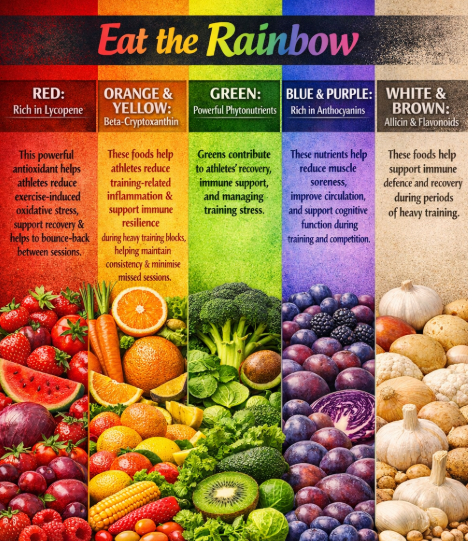
Specific compounds in fruit have been further studied for their potential performance benefits. These include polyphenols often found in specific fruit and vegetables such as tart cherries for recovery and sleep and New Zealand blackcurrants to support immune system, and recovery from training. Foods high in nitrates such as beetroot makes it easier to for the blood to travel around the body.
There is also increased interest in consuming a greater variety of plant foods including breads, cereals and legumes (e.g. baked beans) and the effects on the gut microbiome. These foods provide prebiotics that feed the gut microbiome with greater diversity linked to overall health. Insight into the gut-brain-axis and the role of microbiome will be explored in further detail in next month’s column.
Increase plant food variety by making simple switches e.g.
- Alternate between oats or toast for breakfast,
- If you add fruit to breakfast switch between berries one day to a banana the next or peaches (canned or fresh)
- swap between rice, kumara or pasta at lunch or dinner
- bulk out mince meals with lentils
Coach’s toolbox
Coaches can play an important role in supporting athletes to increase their intake of a wide variety of fruits, vegetables, and plant‑based foods. Some simple tips:
- Encourage athletes to increase fruit and veg intake when there’s increased stress on the body such as hard training or times of illness
- Remind them frozen fruit and veg have the same nutritional benefit as fresh, helps to reduce spoilage and are often more economical
Resources:
Phytonutrients: Paint your plate with the colors of the rainbow – Harvard Health