Performance Nutrition for athletes and coaches
HPSNZ Update will run a monthly column from our Head of Performance Nutrition, Christel Dunshea-Mooij, and her team of performance nutritionists based at high performance centres around the country delivering innovative and evidence-based expertise for athletes and coaches.
The series will drill down into specific areas of performance nutrition and provide the latest insights and practical information for athletes along with specific tips for coaches. Additional resources will also be provided at the end of each column.
From Science to Plate: Fuelling for the work done
Christel Dunshea-Mooij
“When I match my fuel to my training load, I perform better, recover faster, and have the energy to manage daily life, not just sport.”
Some athletes have very high energy needs. Tour de France riders eat around 9,000 kcal a day, and some elite rowers even more during their heavy training phases.
While most athletes won’t need that much, energy needs are still far higher than most people. Even if a sport doesn’t always feel high intensity (like sailing, gymnastics, or weightlifting), long training days and limited chances to eat make it harder to fuel adequately.
An athlete’s body starts to struggle if they don’t eat enough, especially during busy or high training periods.
Feeling flat, having trouble concentrating or noticing that training feels harder than it should are some of the key indicators of under-fuelling. Over time, this will impact strength, recovery, performance and health.
At its core, fuelling is about matching what and how much is eaten to training, rather than eating the same way every day.
As training shifts across the season, from off-season to build, peak, taper, and recovery, fuelling should shift with it.
The traffic light approach
HPSNZ’s Performance Nutritionists use a simple traffic light approach to help athletes fuel appropriately for the work they do.
- Red light days (hard sets, double sessions or race pace work) increase energy intake by choosing larger portions of carb rich foods and timing protein and fluids before, during, and after key sessions.
- Amber light days (moderate or skills focused training) aim for a balanced plate with enough carbs to train well, just in slightly smaller portions than heavy days.
- Green light days (light training, recovery, or taper) fuel intake is reduced, with smaller carb portions, plenty of vegetables, and consistent protein to support repair and immunity. Keeping meals familiar, nutrient dense, and appropriately sized to feel energised without over fuelling.
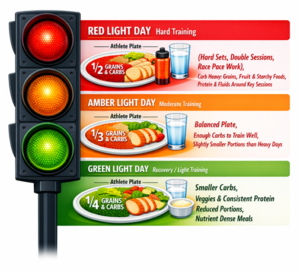
Matching fuel to training load can be as simple as making small additions to usual meals, for example. an extra slice of toast, a banana, a muesli bar, or a glass of juice. It might mean choosing a bagel instead of two slices of bread, or adding rice or potatoes rather than just salad, when training demands are higher.
After training, easy options like chocolate milk, a smoothie, or leftover pasta are simple ways to kickstart refuelling and support muscle repair.
Coach’s toolbox
Athletes often trust their coaches more than anyone else, so the messages about food really matter.
When coaches encourage athletes to refuel, steer away from rigid food rules about when they “should” or “shouldn’t” eat, and support input from Registered Nutritionists/Dietitians, athletes are far more likely to fuel in ways that support both performance and long-term health.
Athlete meals should meet their energy and nutrient needs to support health and performance, while also respecting personal and cultural food preferences.
Encourage athletes to fuel and hydrate consistently across the day, especially before, during, and after training. This supports recovery, improves adaptation, reduces fatigue and injury risk, enhances mood and training quality, and enables the consistent training that drives long-term performance.
Resources
HPSNZ Performance Nutrition infographics
- Fuelling for your performance
- What to eat before training
- What to eat during training
- What to eat after training
HPSNZ LEA resource: Low Energy Availability and Relative Energy Deficiency in sport (REDs)
How our female rowers ate more and triumphed
Mountjoy M, Ackerman KE, Bailey DM, et al 2023 International Olympic Committee’s (IOC) consensus statement on Relative Energy Deficiency in Sport (REDs) British Journal of Sports Medicine 2023;57:1073-1098.